

No per-user cost
We've never charged per license and we're not going to start. Charging per person penalizes the exact thing that makes a CMMS work: everyone using it.
The company
It's not a marketing line: it's the reason the system is organized the way it is. The unusual decisions in GMAO CLOUD usually come from a real problem someone had in front of them.
GMAO CLOUD started in 2016 as a product of Tecneca, an engineering company that provided maintenance services and needed a tool it couldn't find. In 2020 it was incorporated as its own company. That dual condition — having been users before being a vendor — explains a lot about how the product is built: statuses are yours because no other company's workflow ever fit us, licenses are unlimited because we know what happens when charging per user pushes people to share accounts, and the technician app's offline mode exists because our own technicians used to work in basements.
Almost all of it, by getting it wrong first.
Four things we decided early on and haven't changed.
We've never charged per license and we're not going to start. Charging per person penalizes the exact thing that makes a CMMS work: everyone using it.
Statuses, checklists, catalogs and modules get configured around how you work. It feels more honest than asking you to change your process, and what we find missing we take into the product for everyone.
Every site has its own isolated environment and its own data. If you ever leave, you leave with your information.
We'd rather lose a sale by saying we don't do something than win it and have that discovered during rollout.
More than sixty companies manage their maintenance with GMAO CLOUD, with more than 2.8 million assets under management and more than 370,000 work orders logged during 2025. These are very different operations — industrial plants, retail chains, service providers with technicians on the road, hotels, municipal facilities — and that variety is exactly what has pushed the product toward configurability instead of a single fixed workflow. The team is still small and still talks to customers directly, which is the part we least want to change.
There are three product decisions we made years ago that explain almost everything else. The first is not charging per user. It looks like a pricing question and it's actually a design decision: as soon as adding a person costs money, companies leave out of the system whoever generates the least work — a store manager, a customer who would open their own requests, a small subcontractor — and by doing so lose exactly the information that was needed. The second is that the product adapts to the operation and not the other way around, because in maintenance no two companies work the same way, and forcing a process change to fit a piece of software is the fastest way to make sure nobody uses it. And the third is that new features ship as part of the subscription, so the product you have three years from now is better than the one you signed up for, not the same one with patches.
Leave your details and we will get in touch to see whether we fit. No commitment, no lock-in period.
A large company gives you a tiered support structure, a ticket number, and a different person every time you write in. We've deliberately built the opposite, and it's the part of the service we care about most: you talk to people who know the product inside out, the same ones over time, and between telling a problem and having it heard by someone able to fix it, there's a conversation, not an escalation chain. A good part of what exists today in GMAO CLOUD is there because a customer asked for it and was right, and that only happens when whoever receives the request and whoever decides the product sit at the same table. The trade-off, we say up front: we take on a limited number of rollouts at a time, and when the calendar is full we say so instead of committing to a date we won't meet. We'd rather lose that deal. A maintenance rollout that starts with the wrong timeline expectations never gets fixed afterwards.
On a sales website everyone talks about what they do well, so saying what we don't do is the only way to make the rest credible. We don't have ISO 27001 yet, but we're working on it: we've started the conversations and committed to obtaining it before 31 December 2027. We're not fleet management software, nor a construction management program with budget items and certifications, nor a predictive maintenance platform with sensors: there are things others do better because that's their whole focus. The customer app doesn't work offline, though the technician one does. And no system guarantees anyone's regulatory compliance; what it does is help you plan, record and prove, which isn't the same thing. Each one of these lines has cost us some opportunity, and it's worth it: rollouts that go badly almost always started with someone expecting something that was never fully promised.
We joined Lanzadera in 2021 and spent a year in its program. In 2025 we came back to take part in Programa 2.0, and we're still part of both the program and its ecosystem. That same year we went through CEEI Valencia's Incubation and Acceleration Program, run in partnership with INCIBE Emprende, the initiative of Spain's National Cybersecurity Institute under the Ministry for Digital Transformation, funded by the European Union through Next Generation funds. We mention it because you get into these programs through selection and you come out having had to defend the business in front of people with no interest in agreeing with you, which is exactly the kind of conversation you don't get when you only work with your own customers. Plenty of decisions that seem obvious to us now — not charging per user, saying no to what we don't know how to do well — came out of discussing them there.
Entrevista publicada por CEEI Valencia sobre el programa(se abre en otra pestaña)
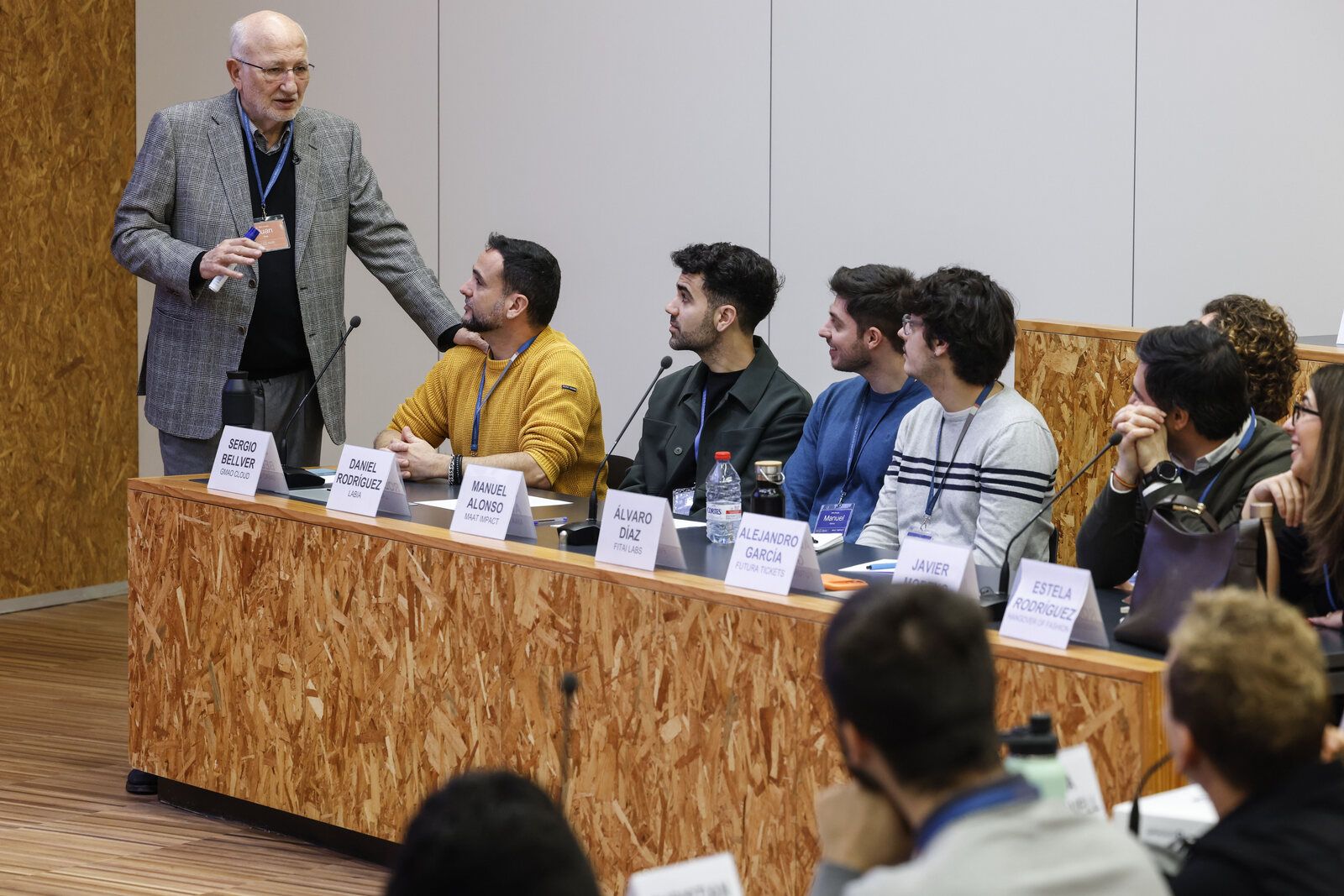
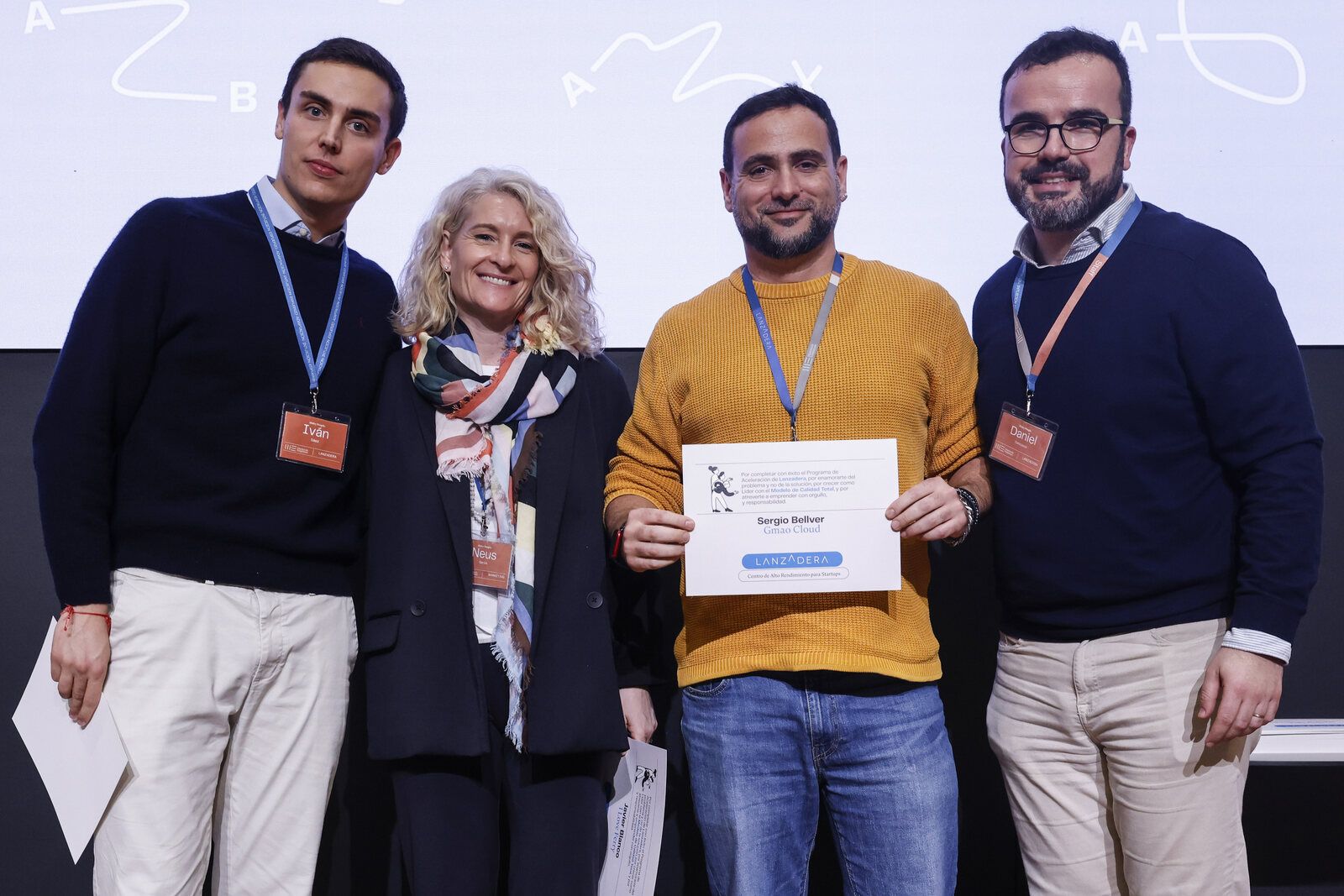
It's a fair question to ask when signing a multi-year contract with a company that isn't a multinational, and we'd rather answer it ourselves than leave it to whoever's evaluating the proposal counting faces on a website. The answer has three parts, and none of them depend on our good will. Your maintenance history is yours and you can take it with you at any time, without permission and at no cost. Every site lives in its own isolated environment, with daily backups kept in two separate locations within the European Union. And the infrastructure is documented and publicly described on the security page, it's not knowledge that lives in one person's head. A system you can leave with your data in hand is a bounded risk; one you can't isn't, no matter how big the company behind it is.
Through Lanzadera, which we joined in 2021 and came back to in 2025 for Programa 2.0, which we're still part of. And through CEEI Valencia's Incubation and Acceleration Program, in partnership with INCIBE Emprende, also in 2025. There's an interview published by CEEI Valencia explaining what we were working on at the time.
Most of our customers are in Spain, and the product is built for operations with sites abroad: it supports more than fifteen languages, and the multi-company, multi-site structure is designed exactly for that. What is local is the closeness of our support, which is in Spanish and staffed by people who know the product inside out.
It's a question worth always asking, and we answer it in detail on the security and infrastructure page, along with backups, isolation between customers, and what happens to your history the day you decide to leave.
The product was born in 2016 inside Tecneca, an engineering company that provided maintenance services. In 2020 it was incorporated as its own company.
More than sixty, with more than 2.8 million assets under management and more than 370,000 work orders logged during 2025.
In Spain, and the support team works in Spanish. The infrastructure is hosted in European Union data centers.
Directly. The team that builds the product is the same one that talks to customers, which is what lets a real need end up in the product instead of on a list.
A short demo on your own operation says more about whether we're a fit than any page on this site.
Accessibility
Saved in this browser. Light or dark theme is set from the footer.